Oriverse Systems
BUILD.
Production software, AI systems and autonomous infrastructure engineered to run reliably, efficiently and at scale.
Reliability, efficiency and scale are architectural requirements from the first commit, not upgrades added once something breaks.
About Systems
Infrastructure built to operate.
Oriverse Systems builds production software and AI infrastructure for real operating conditions. Reliability, efficiency and scale are architectural requirements from the beginning, not upgrades added later.
“We consider infrastructure foundational, not optional. Every product we ship is built on a layer we built ourselves.”
That foundation supports products with very different demands: real-time voice interaction, autonomous workflows, language-aware transcription, structured document processing and high-volume data transformation.
The common requirement is dependable execution. Systems are designed around the conditions they will actually face: latency, failure, changing workloads, imperfect inputs and the cost of keeping software running.
The infrastructure stays behind the experience. The reliability is what the user feels.
Systems Portfolio
Auris
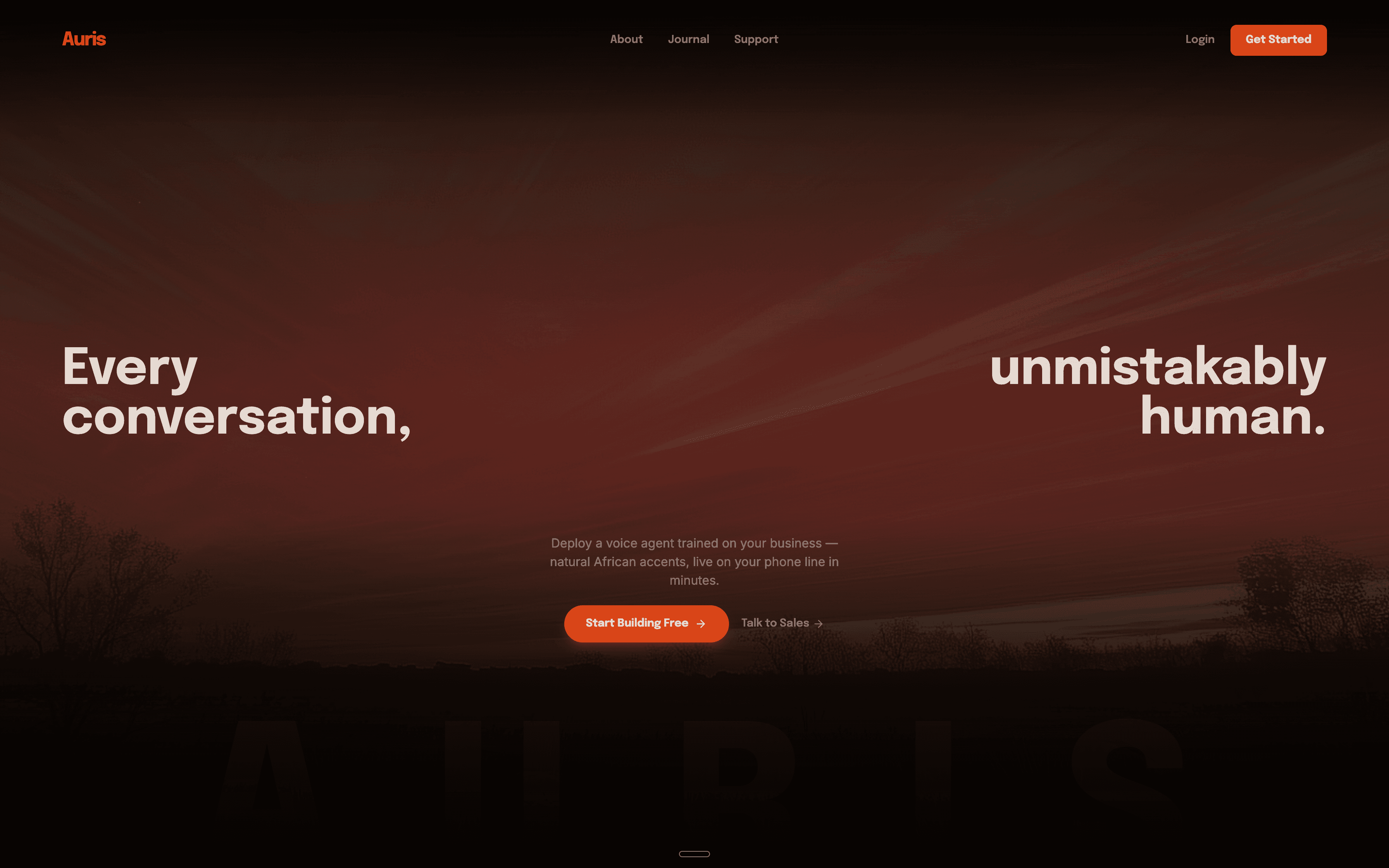
An AI voice agent platform that enables businesses to create, deploy, and manage realistic voice assistants, without an engineering team. Auris orchestrates a real-time pipeline delivering sub-1.5 second end-to-end latency with natural conversation memory, barge-in interrupt handling, and personality customisation. Built for West African markets with Paystack billing, NGN pricing, and West African speech optimisation.
Qore
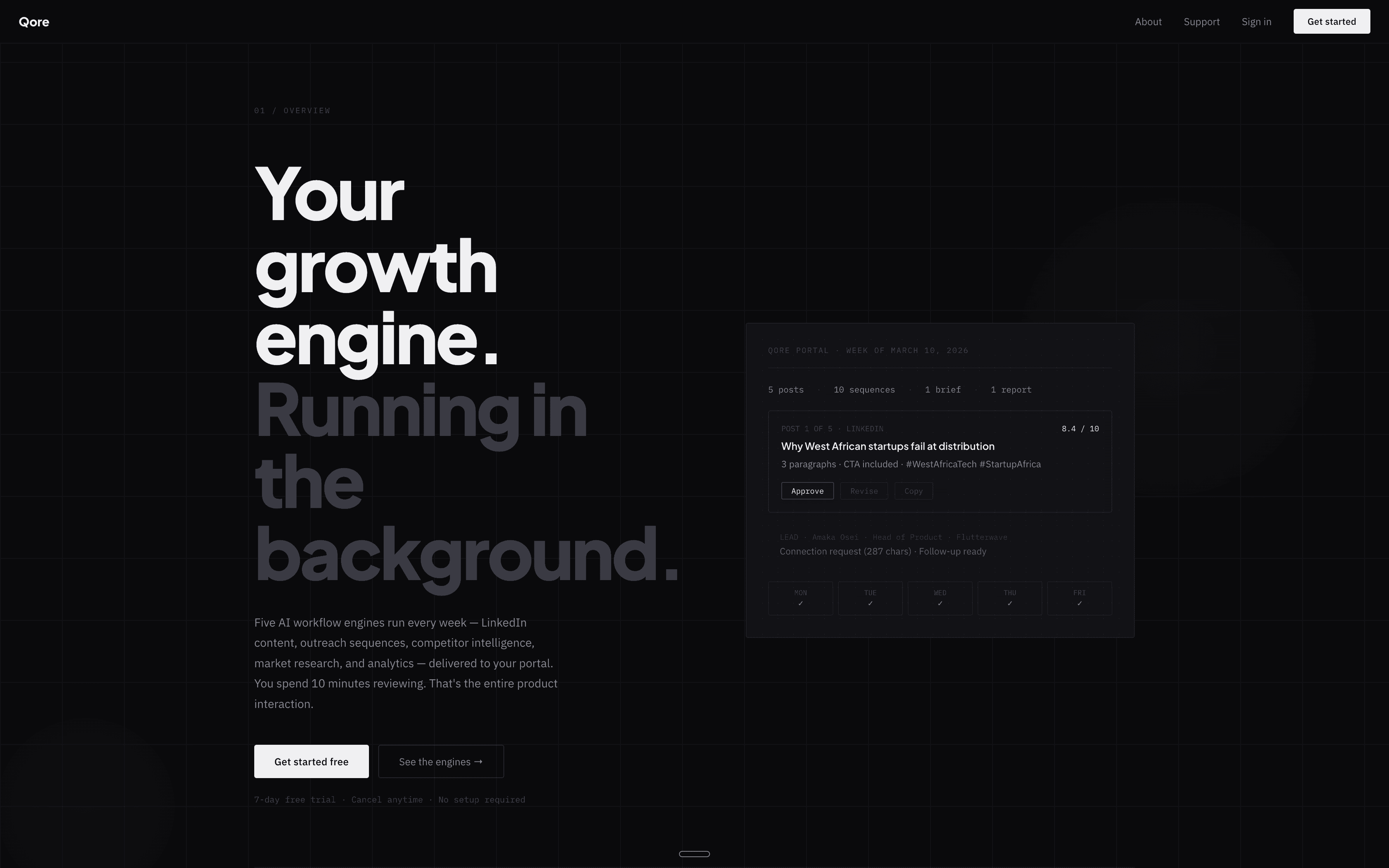
An AI-powered business operations platform that delivers automated growth outcomes on a weekly schedule. Qore runs five workflow engines: LinkedIn content, lead outreach, competitor intelligence, market research, and performance analytics. It delivers real, ready-to-use outputs directly to a client portal. Total time required from the client: 10 minutes per week.
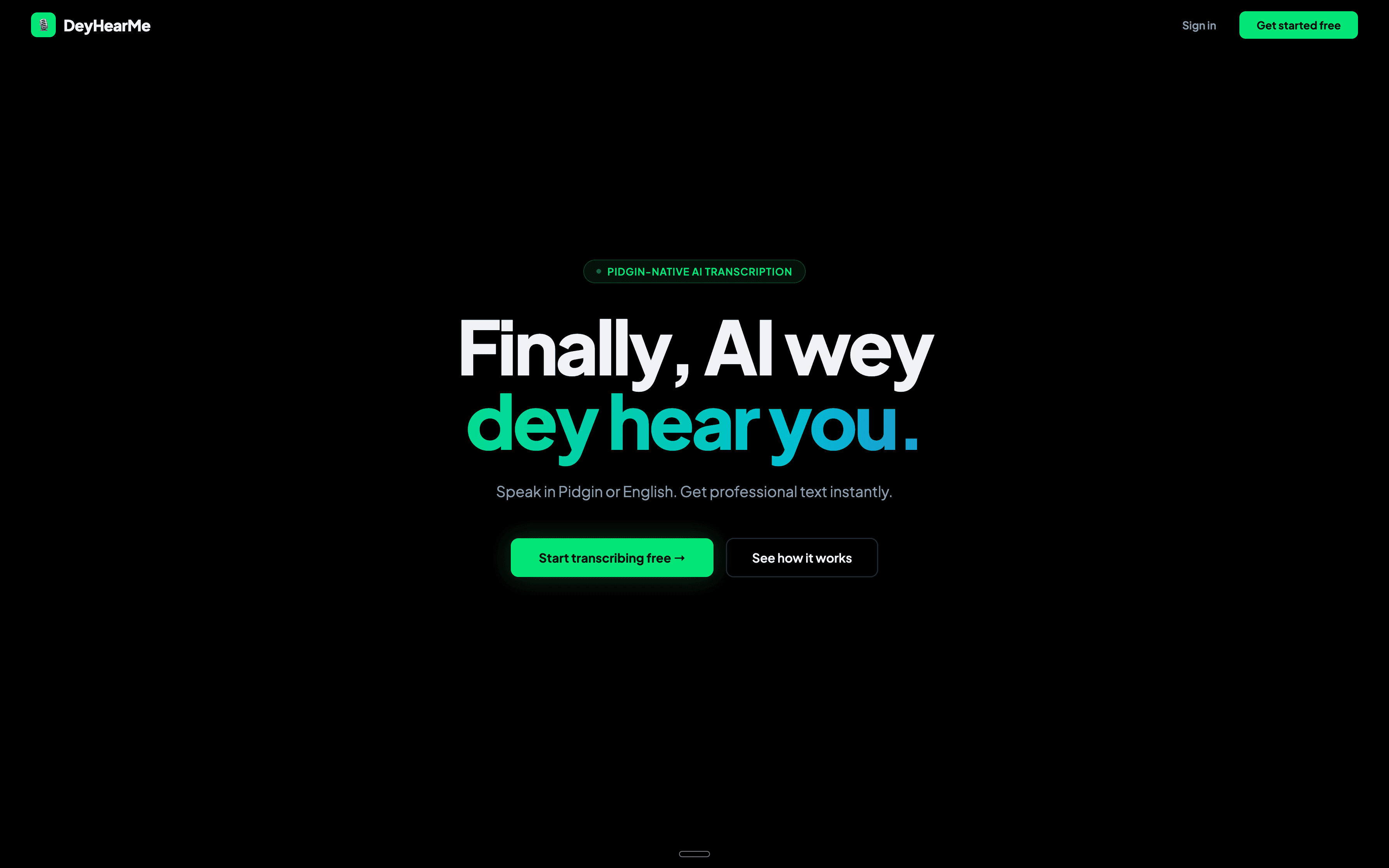
DeyHearMe
A unified AI speech transcription and dictation platform built West Africa first. Upload audio files on the web or use the desktop client for real-time hotkey-triggered dictation into any app. Speak in English or Nigerian Pidgin, and get output as raw transcript, clean English translation, or professional register. The first serious voice tool that treats Pidgin as a first-class language, not an edge case.
Built for production.
Three requirements decided at the architecture stage, because they cannot be added afterwards.
Reliability
Systems are designed to keep operating through failure, with resilient architecture and recovery built into the deployment model.
Efficiency
We design for useful throughput and controlled infrastructure cost from the architecture upward.
Scale
Products are designed to grow with usage without turning every traffic increase into an operational emergency.
What a request traverses
Latency is not a number you tune at the end. It is decided by how many hops sit between a person speaking and hearing an answer, and by which of those hops are allowed to block.
In Auris the speech, inference and policy stages stream rather than queue, so the reply begins before the thought is finished. Barge-in runs on its own path, so an interruption cancels generation instead of waiting politely for it to end, which is the difference between a system that answers and one that holds a conversation.
The same shape carries DeyHearMe. Upload and hotkey dictation are two entry points into one pipeline, so Pidgin and English are handled by the same path rather than one being bolted on.
Evidence
Systems sells software companies depend on, so the claims below are the ones that matter when something goes wrong at 2am.
- Voice latency
- Sub-1.5 second end-to-end in Auris, with barge-in interrupt handling and conversation memory across turns.
- Language
- West African speech optimisation. Nigerian Pidgin is a first-class language in DeyHearMe, not an edge case.
- Billing
- Paystack integration with NGN pricing, so customers pay in their own currency.
- Automation
- Qore runs five workflow engines on a weekly schedule: LinkedIn content, lead outreach, competitor intelligence, market research, performance analytics.
- Client effort
- Ten minutes per week. Outputs land in a client portal, ready to use.
- Operations
- Deployed on managed infrastructure with automatic rollback. A failed release never reaches a customer.
Build with Oriverse Systems.
Start a Systems projectOpen Secure Channel